
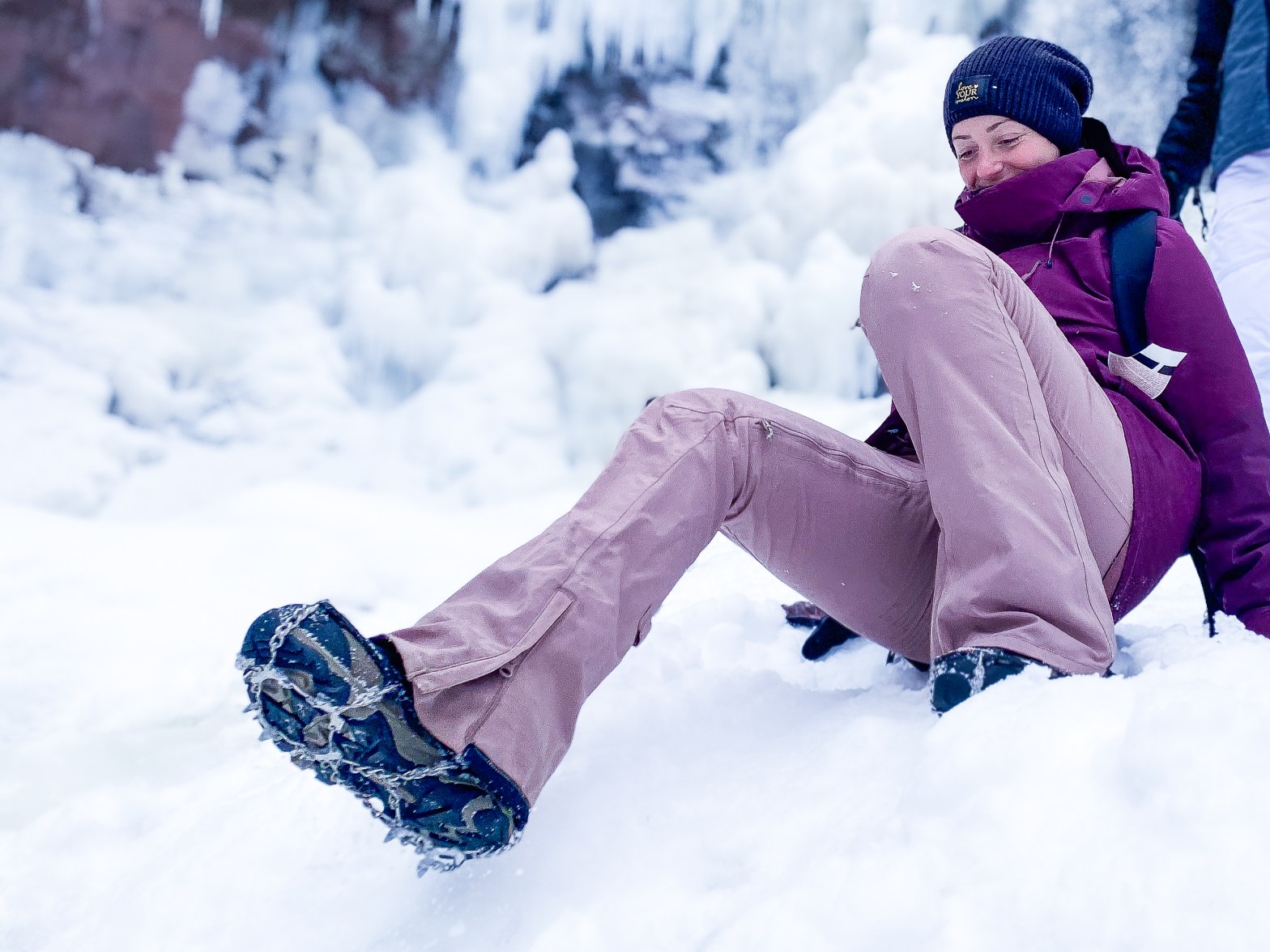
No matter what type of adventure you’re setting out for in winter – one of the most important aspects is making sure that you have the right type of traction. From deep snow, to glassy ice – and everything in-between – check out our in depth guide.
Snowshoes
When there is more than about 6 inches of snow on the trail, snowshoes are a must. They help to conserve energy by floating you over the snow instead of letting you sink in, as well as keep you more stable. Further, they pack down the trail for those behind you instead of leaving potentially dangerous ‘postholes’. While some trails may quickly get packed down after snowfall, you should never rely on this.

Just like with any traction device, it’s better to need and not have, than to have and not need. Hikers often seriously underestimate just how tiresome trekking in deep snow can be without snowshoes. Our favorite all around snowshoes are the snowshoes are the MSR Trail Evo’s, which retail for around $169.
YakTrax, Studs, or Nano Spikes
While these devices do provide some additional traction on packed snow and icy surfaces, they are more suited for use in urban areas. They just don’t provide enough grip on the incline and declines, and can often inspire false confidence. For example, they might aid in getting up a snowy or icy incline, but prove useless when trying to go down that same portion. If you’re headed out for anything more than an icy driveway, sidewalk, parking lot or carriage road – go for the microspikes below.
Microspikes
Microspikes just might be the most useful and versatile winter traction device – and they’re what we use on our guided hikes with clients most often. They can fit over most boots, are relatively lightweight, and provide great grip on packed snow, icy trails, moderate inclines, and a wide variety of trails. Their slip on nature means that you don’t have to deal with the straps of snowshoes or crampons. If you only plan to buy one type of winter traction – it should be a set of microspikes!
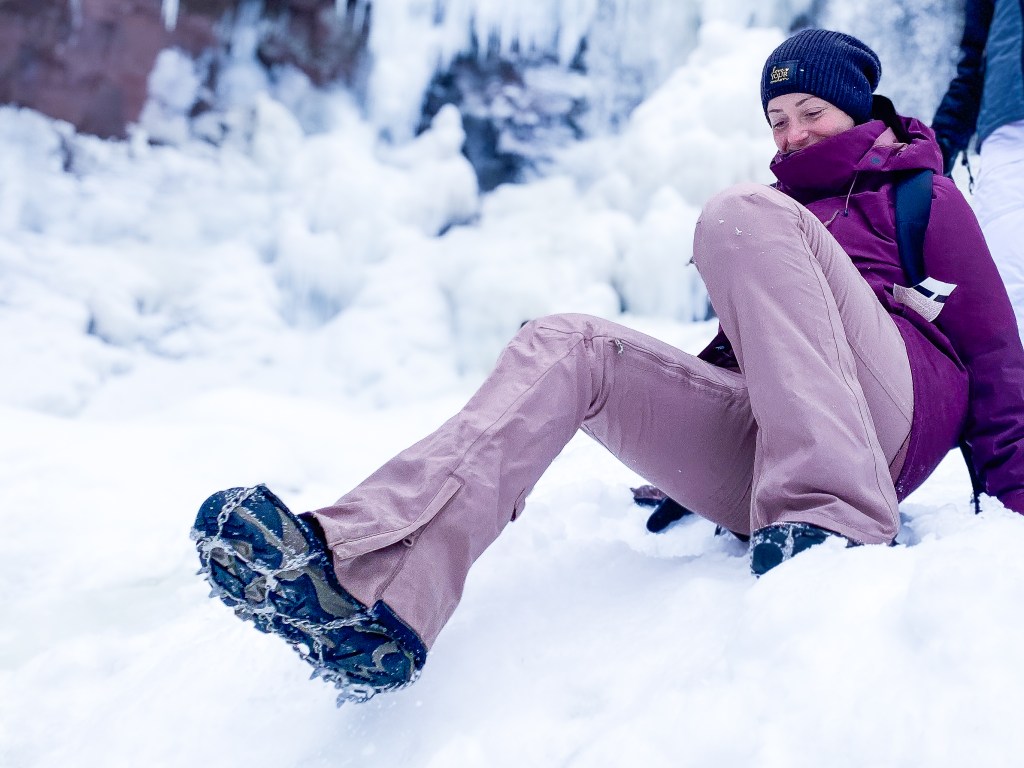
Spike sizes range from about 1/4″, to 2/3″ on more aggressive models, such as the Hillsound Trail crampons that we use on most of our guided trips. Even though Hillsound calls these models ‘crampons’, they fit much more closely into the micro spike category. Kahtoola also makes a solid model, but we prefer the slightly more aggressive spikes of the Hillsounds.
Trail Crampons
Trail crampons are the middle ground between microspikes and a full mountaineering crampon. With strap style bindings, these crampons will go onto most boots without too much trouble.
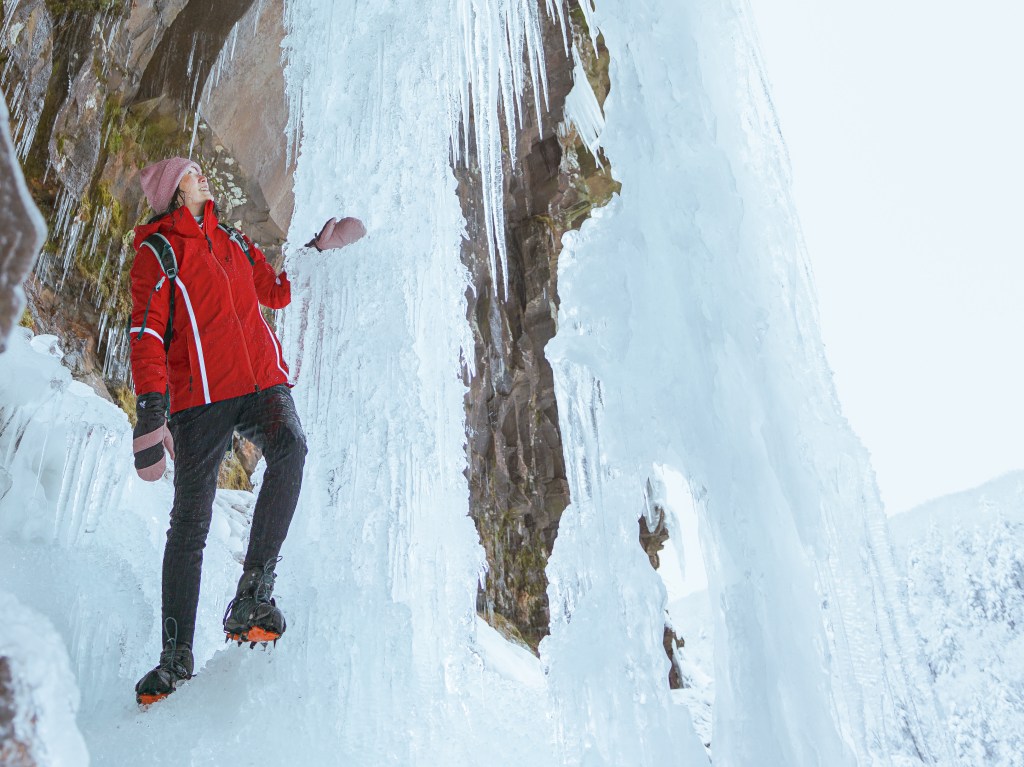
Trail crampons have more bite and control than microspikes
Crampon spikes are attached to a rigid frame, as opposed to the chainlinks of microspikes. They provide additional safety and stability on steeper sections of ice and snow, with the help of front points that allow you to kick into the terrain in front of your feet. The larger, 1” spikes are easier to get to bite into particularly hard ice on frigid days.

Hillsound Trail Crampon Pro cleats attached to casual winter boot
This does come at the expense of weight and comfort versus microspikes. Because there is more metal now touching your boot, they can draw the cold of the ice into your boot more easily.

If a day calls for these traction devices, and your feet get cold on a normal winter day, we recommend going with a thicker wool sock, or using heated insoles/toe warmers.
Mountaineering Crampons
The next major step up is the mountaineering crampon. This type of crampon is best suited for intense winter conditions with steep inclines, hard ice, nevé (partially refrozen snow) and glacier ice. These devices have sharp and aggressive points that are deigned to be kicked into hard snow and ice. In order to use these, you must have a proper mountaineering boot with a rigid sole designed to accommodate these crampons. Usually, if conditions call for full mountaineering crampons, you’ll also want to be carrying an ice axe with you. There are times in the Catskills (and more often than not in the Adirondacks) where this would be the recommended setup for climbing the high peaks in winter.
Keep in mind that in the Adirondacks, it’s required to carry snowshoes with you anytime the depth of snow on the trail is 6″ or more. This doesn’t refer to the start of the trail – but rather at any point throughout the entire trail. So, you can pretty much always expect to have to carry snowshoes in the Adirondacks from around November through at least the end of April.
Technical Crampons
Until you get into alpinism with steep sections of ice/technical climbing, or vertical ice climbing, mountaineering crampons will get you through just about everything else on the planet. There are many types and varieties that we won’t go into in this post, since it falls into the the category of climbing rather than hiking!

And, if you’re unsure about what traction to buy, or want to tackle a winter hike – we’ve got you covered! When you book an adventure with Upstate Hiking, we’ll provide you with whatever gear the conditions call for! Click the button below to join or schedule a guided winter hike in the Catskills or Adirondacks!
 Upstate Hiking